LVM
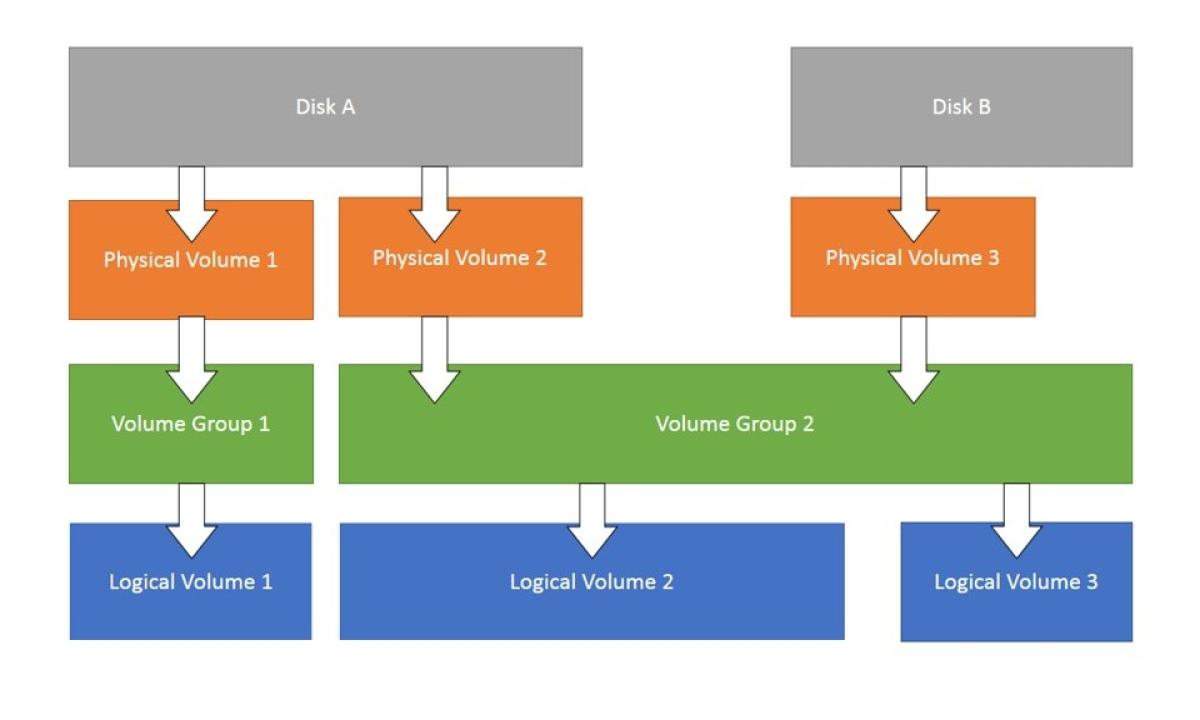
LVM, or Logical Volume Manager, is a tool used on Linux systems to manage disk space in a more flexible way compared to traditional partitioning. It acts like a layer of abstraction between your physical disks and the logical volumes you use for your filesystems. Here's a breakdown of how it works:
Components of LVM:
- Physical Volumes (PV): These are your actual physical hard drives or partitions on those drives. They are the raw storage devices that LVM uses.
- Volume Group (VG): A VG is a collection of PVs that are grouped together under LVM management. You can think of it as a pool of storage space.
- Logical Volume (LV): This is the virtual partition that you create from the storage space in a VG. You can format an LV with a filesystem (like ext4) and use it to store your data just like a regular partition.